

Most people buy a lift chair the way they buy a sofa. They sit in the floor model for a minute and a half, decide the upholstery looks nice, and hand over a card. When the person who will actually use it is heavy or tall, that minute and a half misses nearly everything that matters. A chair that is too narrow squeezes the hips. A chair with too short a back leaves the shoulders and the head hanging over the top. And a chair that will not clear the front door is a very costly thing to store in a garage.
I come at this from twenty-four years as a home health aide, much of it spent helping people get up out of chairs that were the wrong size for their bodies. Now I am 68, Ray is 73, and the chair in our living room is a CANMOV Power Lift Recliner made for big and tall users. Ray is 5 foot 11 with broad shoulders and a knee replacement he still does not trust. That chair has a 21 inch seat and a 27 inch backrest, and living with it has taught me the order you should check things in. Here is how I would do it if I were starting over.
The chair has to fit the body before it fits the room
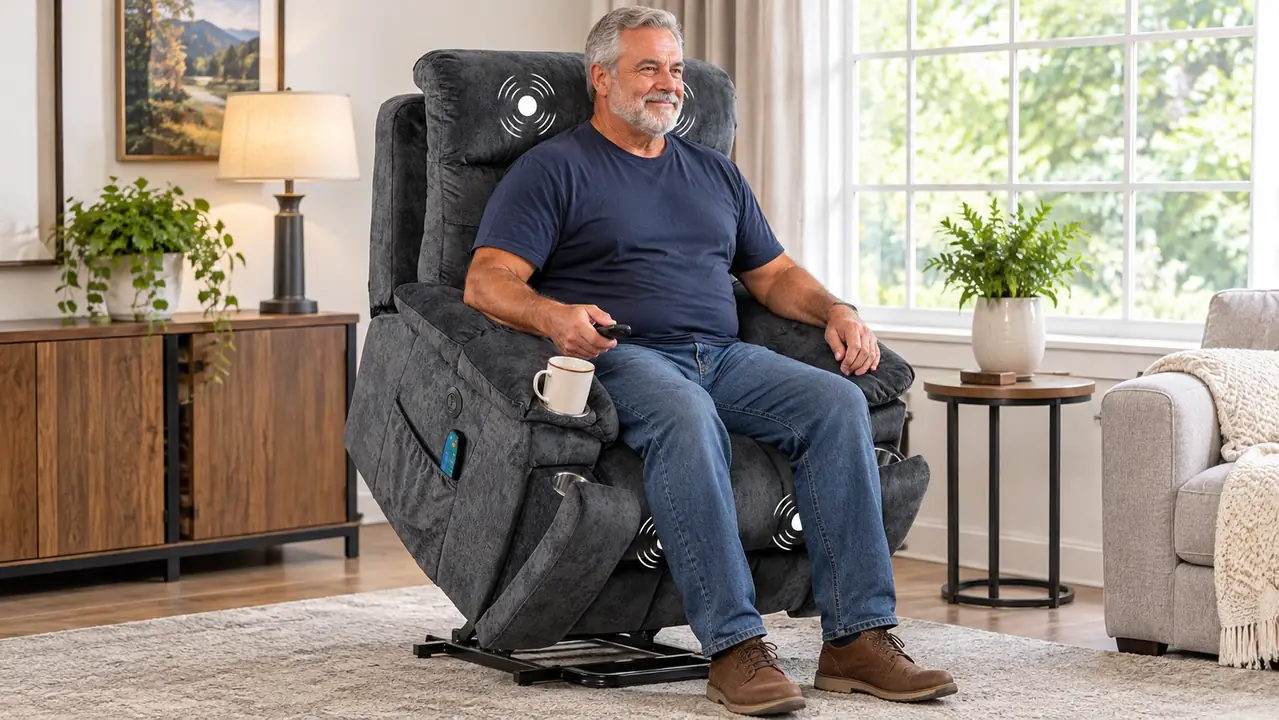
Ray is 5 foot 11 and broad across the shoulders, which is exactly the frame most lift chairs are not built for. The CANMOV big and tall recliner gives him a 21 inch seat and a 27 inch backrest, so his shoulders are not pinched and his head is not hanging over the top edge. Have your own numbers ready before you order.
Amazon Check Today's Price on Amazon →Step 1: Measure the person before you measure the chair
Get three numbers onto an index card before you look at a single chair. Height. The widest point across the shoulders or the hips, whichever is greater. And, sitting on a firm dining chair with both feet flat on the floor, the distance from the floor to the crease behind the knee. That third number is the one nobody thinks to take, and it is the one that decides whether a chair feels right or feels like work.
On Ray that last number is 19 inches. If a recliner seat sits much lower than that, his knees end up above his hips and he has to rock himself forward to get out. The lift function helps with that, and it is the reason we bought a power chair at all, but the lift is doing repair work on a bad seat height. Get the seat height close to right and the lift only has to handle the last part of the standing.
For a heavier person, ask for the rated weight capacity in writing before you buy anything. If a listing will not state it plainly, that silence is an answer. Ask how the frame is built, too. The CANMOV listing states an FSC certified wood frame, which tells you what you are sitting on and is the sort of plain fact I want before I trust the rest of the description.
Step 2: Match the seat width and backrest length to the body
Seat width is the measurement people fudge. Measure across the widest part of the body, then add two inches so a winter sweater does not turn the armrests into a clamp. The CANMOV big and tall chair has a 21 inch widened seat, which is wider than the standard lift chair you will find on most showroom floors. On Ray, that extra width is the difference between sitting in a chair and being wedged into one.
Backrest length matters more for a tall person than any padding claim on the box. A 27 inch extended backrest, which is what this chair lists, lets a tall man's shoulders rest against the back instead of rising above it. When the back is too short, the head tips forward all evening and the neck takes the strain. Sit with the back of your head against the cushion and notice where the top edge lands on your shoulders. If it stops below the shoulder blades, keep looking.
The armrests deserve a look as well. You push off the arms to stand, so they need to be solid and set at a height where your elbows bend comfortably. On a heavier person, a soft armrest collapses under the heel of the hand within a year or two. Press down hard on the floor model, or on the arms of the chair you already own, and see what gives.
A 21 inch seat and a 27 inch backrest do more for a big man's comfort than any amount of padding, because they let his shoulders and his head sit where they belong.
Step 3: Walk the delivery path and check the floor
Our front door is 32 inches wide. The chair measures 39 inches across and 38 inches deep and weighs 100 pounds. It got in, but not because I guessed. Before ordering anything, walk the whole path with a tape measure: the front door, the hallway, the turn into the living room, and the tight spot between the coffee table and the wall. Write down the narrowest number you find. If the chair will not clear it, ask the seller whether the back separates for delivery.
Then look at what is under the chair. This chair's listing recommends a hard floor surface, and I understand why. A lift chair pushes down and back as it rises, and deep carpet over a concrete slab, which is exactly what our living room is, lets the base settle and rock over time. If your carpet has any thickness to it, put a sheet of plywood or a firm chair mat under the base before the chair goes into service. It is a cheap fix that keeps the lift doing the job it was built for.
One outlet is all we have behind the recliners, and a power lift chair does not move once it is plugged in and settled. Measure where the outlet sits and how far the chair will land from it. If you need an extension cord, get a heavy one rated for the draw and tape it down where nobody will catch a foot. Ray's walker found a cord once and that was enough for both of us.

Step 4: Pick the controls you will actually use every day
The remote is the part you touch every day, so it deserves more attention than the fabric. This chair runs on a remote control at the push of a button, has five massage modes across eight massage points, includes heat, and carries a USB charging port. The side pocket and the hidden cup holders are the details I did not expect to use and now use constantly, mostly because the remote finally has a home that is not the floor.
Be honest with yourself about which of those you will actually run. Heat on a stiff lower back in the morning, yes, in our house. Massage, sometimes, on a cold evening. The USB port, every single day, because Ray's phone is forever at half charge. The lift and the recline, a dozen times a day. If you are shopping for a parent, that short list is what you should be comparing between chairs, not the number of features on the box.
Check the remote for the boring things while you are at it. Can you read the buttons without your glasses? Does it fit your hand, or does it take two thumbs and a good mood? Does it live in a pocket when it is not being used, so nobody kneels on it? A remote that slides down behind the cushion is a lift chair that cannot lift.
Step 5: Run the lift through a full cycle before you commit
Sit in the chair and get out of it three times before you buy. Getting in feels good on almost any chair. Getting out is where you learn the truth. Run the lift all the way up and see where it sets you down. You want to finish on your feet with your weight over them, not pitched forward with your arms out looking for something to grab. Ray's knee decides this for him, and it took two tries to find the point where he stands up straight instead of stumbling.
Then recline all the way and come back up. The back should move smoothly and stay where you leave it. Nothing should grind or lurch. Bring the chair back to sitting and lift again, because that full round trip is what a day of use actually looks like. If you buy from a store, do it there with the salesperson standing back. If you buy online, keep the box and the packing until you have lived with it for a week.
One more fit check for a taller person. Sit down, recline fully, and look at where your heels land. If your calves are hanging off the end, the chair is short in the leg for you and every evening will end with your feet going numb. No cushion fixes that, so find it now rather than in March.
What Else Helps
The chair is only part of the setup. Clear the path from the chair to the bathroom and the kitchen, and get the loose throw rugs out of it. A side table at the right height so a cup does not have to travel far. A lamp the person can reach without standing. A phone on the arm of the chair or in a pocket, not across the room. If a home health agency is already in the family's life, ask whether an aide or a therapist will look at the arrangement, because a second set of eyes catches what families stop seeing.
And be honest about the money side of it. A big and tall power lift chair is a real purchase, and the CANMOV is priced like a chair rather than like medical equipment, which is part of why we went with it. Put today's price next to what a standard recliner plus another year of struggling to stand would cost you, and then decide. If a chair is wrong for the body, no discount makes it right.
Measure the body first, then check the chair against it
The CANMOV big and tall lift recliner is built around a wider seat and a longer back, which is the part most lift chairs get wrong for a tall frame. Have your three numbers on the card before you order, and check today's price while you still have the tape measure out.
Amazon Check Today's Price on Amazon →